Modora: Driving Efficiency and Scalability in Interior Design Projects
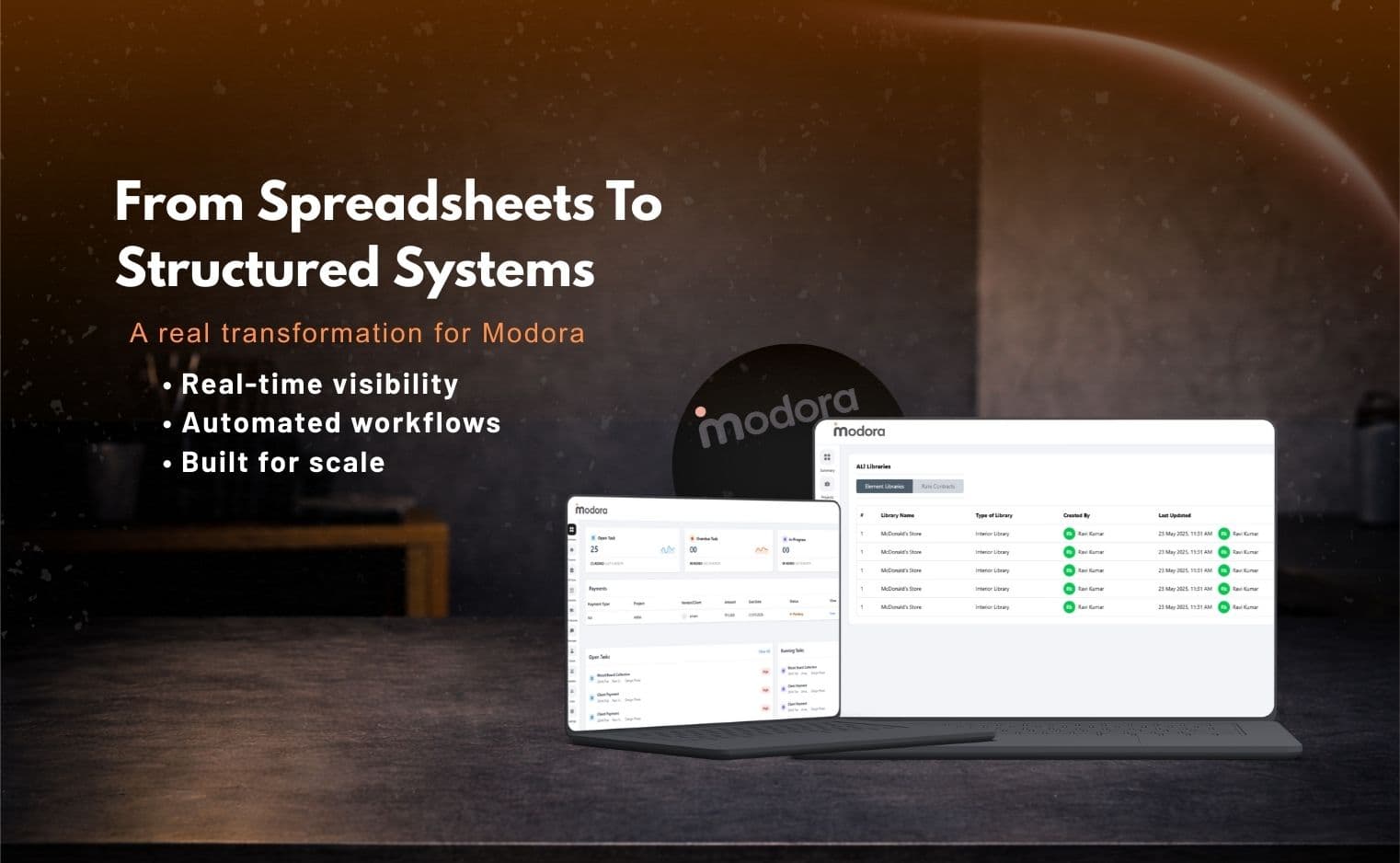
A growing interior design firm was struggling with scattered project data, manual quotations, limited visibility, and overwhelming client communication. To solve these challenges, we built Modora, a purpose-built project management platform designed for interior design workflows. The solution streamlined operations, improved client transparency, and enabled the team to double their project capacity without adding headcount.
Client Name
Padma
Category
Interior Design Industry
Objective
The primary objective was to eliminate operational chaos and build a centralized, scalable system that aligns with how interior design firms actually work. Padma needed a solution that could bring structure to project workflows, automate quotations and payments, streamline snag management, and significantly reduce the time spent on administrative tasks and client follow-ups.
Beyond efficiency, the goal was to enhance the client experience by offering real-time project visibility, professional documentation, and transparent communication — positioning Padma as a modern, process-driven interior design brand capable of scaling sustainably.
Challenges
1. Scattered Project Information
Padma’s project data was fragmented across WhatsApp chats, Excel sheets, emails, and personal folders. Client details, timelines, approvals, and design files had no central home. This fragmentation resulted in frequent delays, missed information, and constant dependency on individuals rather than systems. There was no single source of truth for any project.
2. No Timeline Visibility
Clients regularly requested project updates, but the team lacked a structured way to track progress. Key phases such as Concept, Design, Procurement, and Execution were not mapped or tracked systematically. Without a visual timeline or phase-based tracking, predicting delivery dates or identifying bottlenecks became extremely difficult.
3. Manual Quotation and Payment Management
Quotations were prepared manually in Excel, requiring repeated calculations for items, discounts, and GST. Errors were common, revisions were time-consuming, and creating a professional-looking quotation often took hours. Payment tracking was equally scattered, with no clear visibility into paid versus pending amounts for each project.
4. Snag Management Chaos
Post-installation issues were reported informally via calls, WhatsApp messages, or verbal discussions. There was no centralized system to log, assign, or track snags. As a result, some issues were resolved while others were forgotten, leading to frustrated clients and repeated follow-ups.
5. Poor File Organization
Design files, approvals, site images, and revisions were stored on personal devices or random drives. Finding the latest approved version of a drawing or document was a recurring challenge. Important files were often inaccessible when urgently needed on-site or during client discussions.
6. Team Coordination Gaps
Task allocation happened verbally or through informal notes. There was no visibility into who was responsible for what, no deadline tracking, and no accountability framework. With multiple projects running simultaneously, critical tasks were often delayed or missed entirely.
7. Client Communication Overload
A significant portion of the team’s time was spent responding to client status inquiries and manually sending progress updates. With no self-service option for clients, communication overhead increased, reducing the team’s ability to focus on core design and execution work.
The Big Idea
We envisioned Estate Craft — a project management platform built specifically for interior design firms, not a generic tool retrofitted for creative workflows. The idea was to mirror the real-world journey of an interior project, where work flows through defined phases such as Concept → Design → Execution → Handover.
The platform needed to speak the language of designers: quotations built from item catalogs, visual timelines instead of spreadsheets, structured snag tracking, and seamless collaboration between teams and clients. Our goal was to help Padma transition from reactive operations to proactive, system-driven execution — freeing the team from administrative overload and allowing them to focus on creating exceptional spaces.
What We Did
1. Built a Comprehensive Project Management System
We designed a structured, phase-based project workflow tailored to interior design projects. Each project could be broken down into customizable phases with clearly defined tasks, deadlines, priorities, and progress indicators. A visual timeline gave the entire team real-time clarity on project status and upcoming milestones.
2. Developed a Smart Quotation System
Estate Craft introduced a quotation module powered by a master item catalog. Teams could select items instantly, while discounts and GST were calculated automatically. The system generated professional, client-ready PDFs within minutes, reducing quotation turnaround time from hours to mere minutes.
3. Implemented Robust Payment Tracking
We built a centralized payment module that tracked all financial transactions at the project level. Paid and pending amounts were clearly visible, with a complete payment history and audit trail. This improved financial transparency and reduced disputes or follow-up confusion.
4. Created a Centralized File Management System
Using AWS S3-powered cloud storage, we implemented project-specific folders for storing design files, site photos, approvals, and documents. Teams could search, upload, organize, and bulk-download files securely, ensuring that critical assets were always accessible when needed.
5. Built a Dedicated Snag and Issue Tracking Module
We introduced a structured snag management system where issues could be logged with photos, categories, priority levels, and assigned owners. Each snag followed a clear status workflow — Open → Resolved → Closed — ensuring nothing was overlooked and accountability was maintained.
6. Enabled Real-Time Activity and Audit Tracking
Every action performed within the system was logged with timestamps and user details. This provided complete visibility into who did what and when, creating a reliable audit trail for every project and improving internal accountability.
7. Launched a Client Portal for Transparency
We developed a role-based client portal that allowed customers to log in and view their project progress in real time. Clients could access shared files, see task completion percentages, and track milestones independently — dramatically reducing inbound status queries.
Results
1. 60% Reduction in Administrative Time
Padma’s team reduced daily administrative effort from over three hours to under one hour. Automation, centralized data, and structured workflows allowed designers and project managers to focus more on billable and creative work.
2. 100% Project Visibility
Every project now has a real-time dashboard showing phase progress, task status, payments, and snags. Leadership can instantly identify risks, delays, or overloaded resources, enabling proactive decision-making.
3. 70% Reduction in Client Status Calls
The client portal empowered customers with self-service access to updates and documents. This significantly reduced anxiety-driven follow-ups and positioned Padma as a transparent, professional, and process-driven firm.
4. Zero Lost Snags
All post-installation issues are now tracked, assigned, and resolved systematically. Snag resolution rates improved dramatically, resulting in smoother handovers and higher client satisfaction.
5. 2x Increase in Project Capacity
Before Estate Craft, Padma could manage 5–6 projects simultaneously. With streamlined processes and automation, the same team now confidently handles 12+ projects without compromising quality or timelines.
Key Takeaways
1. Industry-Specific Solutions Drive Adoption
Generic project management tools fail to address niche workflows. By building features aligned with interior design processes — phases, quotations, snags — Estate Craft achieved immediate usability and adoption.
2. Client Experience is a Competitive Advantage
The client portal became a strong differentiator for Padma, helping them win new projects. Transparency and real-time access elevated trust and strengthened client relationships.
3. Structure Enables Scalable Growth
Operational chaos limits growth regardless of talent. Structured systems allowed Padma to scale project volume without hiring additional staff, improving margins and sustainability.
4. Automation Strengthens Relationships
Automated workflows and notifications reduced human error and eliminated awkward follow-ups. Technology improved both internal morale and external client trust.
Conclusion
Padma’s journey from fragmented spreadsheets to a unified, purpose-built platform demonstrates the transformative power of industry-specific technology. Estate Craft did more than organize operations — it fundamentally changed how the team works, collaborates, and scales. With fewer administrative headaches, happier clients, and the ability to manage twice the number of projects, Padma is now positioned for long-term growth.
If your interior design firm is struggling with operational chaos, manual processes, or limited visibility, it may be time to rethink your systems. Looking to build a design-first, compliance-ready project management platform for your interior business? Let’s talk about how we can transform your operations with a scalable web solution built specifically for you.